
What’s My Mind-Body Type? A 1-Minute Check-In and a Simple Guide to the Three Types
Balanced Living / Mind-Body Type
What’s My Mind-Body Type? A 1-Minute Check-In and a Simple Guide to the Three Types

You wake at 3 a.m. Your mind is already running. Your feet are cold under the covers.
Or lunch is late, your day is packed, and you snap at someone over something small.
Or you wake feeling heavy and slow, even after a full night in bed.
In Ayurveda, there’s a distinction between your natural constitution—your underlying mix of Vata, Pitta, and Kapha—and your current balance, which can shift with your circumstances.
Start with the one-minute check-in below. Then, if you’d like to explore your longstanding tendencies, take the free Mind-Body Quiz, a simple dosha quiz.
Try this today: a one-minute check-in
Pause and ask yourself:
“Today, do I feel more restless, more heated, or more heavy?”
You may recognize more than one. Start with what feels most noticeable.
Restless?
Your thoughts are scattered, you’re moving between tasks, or you’re finding it difficult to settle.
Sit down with something warm, such as a caffeine-free drink or a satisfying bowl of soup. Put your phone aside for a few minutes.
Then try five gentle breaths: breathe in comfortably for about four counts and out for about six. Don’t force or hold your breath. If you feel dizzy, breathless, or uncomfortable, return to natural breathing.
Heated?
You’re pushing hard, your patience is thin, or everything feels a little too much.
Take a genuine lunch break away from your screen. Eat without answering messages, and give yourself a moment before returning to the next task.
Ask yourself: What can reasonably wait?
Heavy?
You feel sluggish, stuck, or slow to get going.
If you feel well enough, try a short walk outside or a few minutes of comfortable movement. Start with five minutes and see how you feel.
Movement can support energy, but persistent exhaustion deserves attention. [3] If activity makes you feel worse, don’t push through it.
What is a mind-body type?
My work draws on Ayurveda, a traditional system of health and wellness from India.
You don’t need to know the terminology to begin. At its heart is an interest in how your body, mind, daily habits, and environment relate to one another.
Ayurveda describes these relationships through five elements: earth, water, fire, air, and space.
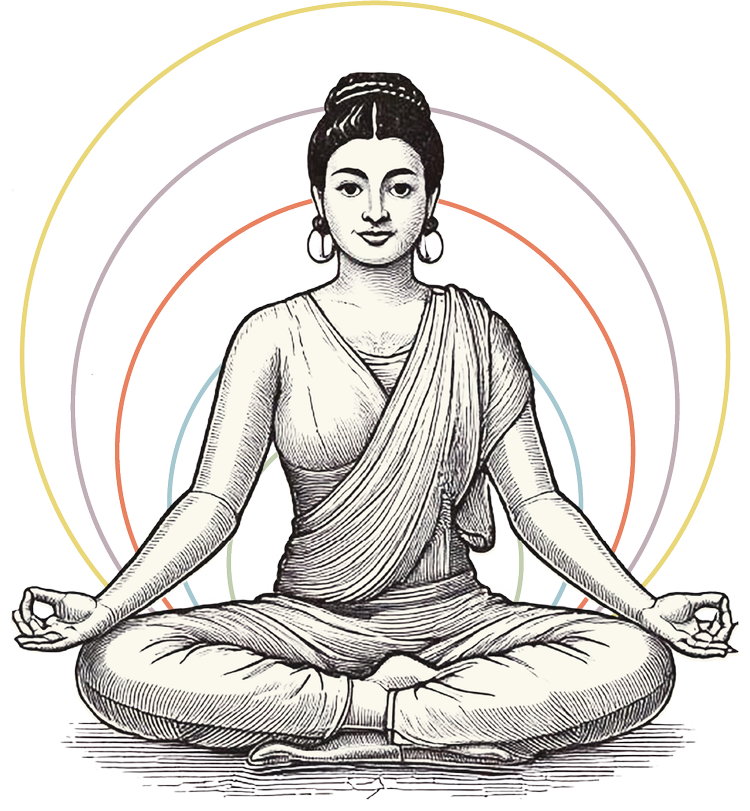
These elements form three traditional patterns, called doshas:
- Air and space—Vata: movement, lightness, and variability.
- Fire and water—Pitta: heat, intensity, and transformation.
- Earth and water—Kapha: stability, cohesion, and steadiness.
At KōTara, I use “mind-body type” as an accessible introduction to these patterns.
In this tradition, everyone has all three. One or two may be more prominent in your natural constitution.
The three mind-body types
Consider what has generally been true for you—and what feels different lately. These descriptions are traditional associations, rather than medical explanations for symptoms.

The airy, creative type
Quiz result: Quick & Variable
Vata: air and space
You may recognize a quick flow of ideas, curiosity, adaptability, and enthusiasm for new experiences.
When movement and variability become especially noticeable, you might experience:
- Thoughts that jump between tasks.
- Difficulty settling at night.
- Uneven energy or irregular routines.
- Changes in appetite or digestive comfort.
- A sense of feeling ungrounded.
Ayurveda traditionally associates this pattern with qualities such as dryness and coolness, too.
A useful direction to explore: warmth and regularity.

The fiery, driven type
Quiz result: Driven & Intense
Pitta: fire and water
You may recognize focus, discernment, determination, and a desire to understand or improve things.
When intensity becomes especially noticeable, you might experience:
- Difficulty switching off from work.
- Frustration when plans change.
- Impatience with yourself or others.
- A tendency to push past hunger or tiredness.
- A feeling that everything needs to be handled now.
Ayurveda traditionally associates this pattern with heat. You don’t have to feel physically hot to recognize these qualities.
A useful direction to explore: space to pause and ease the pressure.

The steady, grounded type
Quiz result: Steady & Grounded
Kapha: earth and water
You may recognize patience, consistency, loyalty, and an ability to stay with people and projects.
When heaviness or inertia becomes especially noticeable, you might experience:
- Difficulty getting started.
- Feeling stuck in familiar routines.
- Sluggishness after meals.
- Less interest in activities you usually enjoy.
- A desire to withdraw or stay still.
These experiences deserve context. Persistent fatigue or withdrawal should not be dismissed as a mind-body type.
A useful direction to explore: comfortable movement and a little variety.
Most people recognize a mix
You can be creative, focused, and dependable. You may recognize qualities from all three descriptions.
In Ayurveda, your natural constitution is understood as relatively stable. Your current balance is considered more responsive to daily life.
Traditional Ayurvedic practice considers influences such as:
- Seasonal conditions.
- Food and meal routines.
- Sleep and rest.
- Demanding stretches at work or home.
- Changes in life stage.
Your usual tendencies and your current needs may differ. Choose practices that fit how you’re doing now, rather than following a list simply because it matches your quiz result.


Explore your natural type in three minutes
The free Mind-Body Quiz asks everyday questions about your longstanding tendencies.
Answer with your usual patterns over the years in mind, rather than only how you’ve felt this week.

Once you have your result:
- 1. Notice which parts feel familiar.
- 2. Consider what has changed lately.
- 3. Choose one manageable practice that fits your current needs.
- 4. Try it for a week and notice how you respond.
Your result offers a starting point for exploration, rather than a definitive assessment of your constitution.
When to talk to your healthcare provider
Seek medical guidance if a change in sleep, digestion, energy, or mood is persistent, worsening, or affecting your daily life.
Unexplained tiredness lasting several weeks deserves assessment, especially alongside symptoms such as unexplained weight loss or gasping during sleep. [2]
If you’re considering herbal or Ayurvedic products, discuss them with your healthcare provider or pharmacist. Some preparations may contain harmful levels of metals, and products need to be considered alongside your health conditions and medicines. [1]
When your result tells only part of the story
Perhaps your quiz result feels familiar, but you still don’t feel like yourself.
You’ve always been capable and focused. Now you’re tired, easily overwhelmed, or struggling with routines that used to feel straightforward.
At KōTara Wellness, I consider your experience across mind, body, emotions, and spirit.
Many people start with an Intuitive Somatic Reading. We begin with a guided meditation, then I tune into you intuitively and share what comes through. Then we ground it in a few simple, practical steps drawn from Ayurveda, yoga, meditation, and somatic practices.
If you’d like ongoing support, the Living Protocol is a personalized wellness plan designed around your body, your symptoms, and the life you’re actually living. You’ll get a clear, written plan for food, movement, sleep, breathwork, and daily routines, with check-ins to adjust as your body and life change, plus referrals to trusted practitioners when additional support would be valuable.


Start with a free Clarity Call
In this free, 15-minute conversation, tell me what’s been happening and what you hope to change. Bring your quiz result if you have one.
I’ll explain how I work, answer your questions, and help you consider whether this support feels right for you.
See the ways we can work together
Questions before you book? Email Charishma@kotarawellness.com.
Give yourself butterflies.
Keep reading

Sleep & Energy
Why Do I Wake Up at 3 a.m.? 5 Things to Try Tonight
Read
Foundations of Ayurveda
The Elements + The Doshas: A Simple Way to Understand Your Inner Ecosystem
Read
Foundations of Ayurveda
What Is Ayurveda? A Gentle Introduction for Modern Life
ReadThis article and the Mind-Body Quiz offer general wellness education and reflection. They do not replace medical assessment or treatment.
Sources
[1] National Center for Complementary and Integrative Health: Ayurvedic Medicine—in Depth